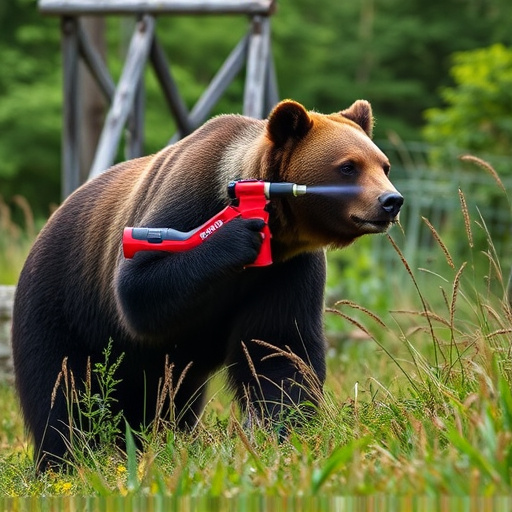
Bear spray, an effective deterrent up to 20-30 feet (6-9 meters), targets a bear's face and eyes for maximum impact. Key factors influencing its range include wind conditions, topography, and spraying angle. Optimal usage involves quick bursts at a 20-30 degree angle while maintaining calmness, followed by immediate retreat and barrier protection to avoid blowback.
“Unraveling the effectiveness of bear spray as a vital tool in wildlife interaction, this article delves into the science behind its range. ‘Understanding Bear Spray Technology and Its Principles’ explores the chemical composition and how it disrupts bears’ behavior. Subsequently, ‘Factors Influencing Bear Spray Effective Deterrent Range’ examines environmental conditions that impact performance. Finally, ‘Maximizing the Coverage: Tips for Optimal Use of Bear Spray’ provides practical advice to ensure its maximum distance coverage, offering crucial insights for outdoor enthusiasts in bear country.”
- Understanding Bear Spray Technology and Its Principles
- Factors Influencing Bear Spray Effective Deterrent Range
- Maximizing the Coverage: Tips for Optimal Use of Bear Spray
Understanding Bear Spray Technology and Its Principles
Bear spray, also known as bear repellent, is a powerful tool designed to protect individuals and groups from potential bear encounters in their natural habitats. Understanding how it works is crucial when considering its effectiveness as a deterrent. The technology behind bear spray involves a mix of capsaicin, the active ingredient found in chili peppers, and other odor-enhancing agents. When sprayed, these chemicals irritate the bear’s eyes, nose, and respiratory tract, causing an intense but temporary discomfort that usually leads to the animal retreating.
The range at which bear spray is effective is a key consideration. Typically, bear spray can provide maximum distance coverage of around 20-30 feet (6-9 meters), creating a buffer zone that allows users time to retreat or deter an approaching bear. However, this range can vary based on factors like the sprayer’s skill, wind conditions, and the type of bear spray used. Proper usage, including aiming at the bear’s face and eyes, ensures maximum effectiveness within this stated range.
Factors Influencing Bear Spray Effective Deterrent Range
Several factors play a significant role in determining the effectiveness of bear spray as a deterrent, and understanding these can help users make informed decisions when venturing into bear country. One of the primary considerations is the bear spray maximum distance coverage. The range at which bear spray can be effective varies based on several elements.
The wind conditions are a crucial factor; a light breeze might carry the spray away from the target animal, reducing its impact, while stronger winds could potentially blow the spray back towards the user. Topography also comes into play; in hilly or mountainous terrain, gravity and air currents can affect how far the spray reaches. Additionally, the angle at which the spray is directed matters; aiming directly at the bear’s face offers better coverage than spraying at a glancing angle. The distance a person starts from when encountering a bear greatly influences the spray’s effectiveness, with closer ranges providing more precise and potent deterrence.
Maximizing the Coverage: Tips for Optimal Use of Bear Spray
To maximize the effectiveness of bear spray, it’s crucial to understand and practice optimal use techniques. One key tip is to aim for the face and eyes of the bear, as this area contains numerous nerve endings that can cause a powerful reaction when sprayed. Holding the canister at an angle of 20-30 degrees and spraying in quick bursts of 2-3 seconds can ensure maximum coverage within the recommended range of up to 35 feet (10.6 meters).
Additionally, it’s essential to stay calm and move slowly during encounters. Rapid movements or panicking might trigger aggressive behavior from bears. When using bear spray, keep your back against a barrier like a tree or rock for protection while you spray. After applying the spray, retreat immediately at an angle away from the bear to avoid any potential blowback, which can occur if the wind is in the wrong direction.
Bear spray has proven to be an effective deterrent, but its range varies based on several factors. Understanding the technology and optimal usage tips can help ensure maximum coverage, making it a valuable tool for navigating areas with bear activity. By knowing how far it reaches, you can better protect yourself and enjoy outdoor experiences with enhanced peace of mind.