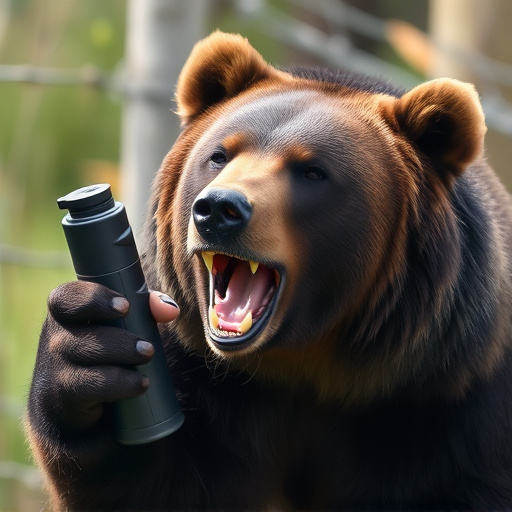
Grizzly bears demand respect in the wilderness due to their keen senses and unpredictable nature. Understanding their behavior, such as warning signs of an attack, is crucial for safety. Bear spray, effective up to 20-30 feet (6-9 meters), acts as a critical defense mechanism when used correctly by creating a protective barrier, disrupting the bear's sense of smell and vision, allowing users to safely retreat or de-escalate during encounters. Proper usage techniques, practice, and preparation with essential survival gear like bear spray, multitools, purification tablets, high-energy bars, and reflective bandanas significantly enhance safety and survival chances in grizzly bear country.
Navigating the wilderness requires understanding its most formidable inhabitants, notably grizzly bears. This article equips outdoor enthusiasts with essential knowledge on defending against bear attacks. We delve into the behavior and attack patterns of grizzlies, highlighting the critical role of bear spray as a primary defense mechanism. Furthermore, we explore optimal usage techniques to ensure bear spray maximum distance coverage, along with additional safety measures for enhanced wilderness survival.
- Understanding Grizzly Bear Behavior and Their Attack Patterns
- The Role of Bear Spray: Effective Defense Mechanism
- Optimizing Bear Spray Usage for Maximum Distance Coverage
- Additional Safety Measures and Wilderness Survival Tips
Understanding Grizzly Bear Behavior and Their Attack Patterns
Grizzly bears are powerful and unpredictable animals, and understanding their behavior is crucial for your safety in the wilderness. These bears have a strong sense of smell and can detect food sources from long distances. They are typically wary of humans and will usually avoid conflict, but they may become aggressive if they feel threatened or surprised. Knowing their attack patterns can help hikers and campers prevent and navigate potential encounters.
Grizzly bears often charge when they perceive a threat to their cubs, food source, or personal space. They may also charge out of curiosity, especially younger bears. In most cases, a grizzly will give a warning before attacking, such as huffing, jaw-popping, and clacking its teeth. If you find yourself face-to-face with a charging bear, the goal is to convince it that you are not a threat. This can be done by making yourself appear larger, raising your arms, and speaking in a loud voice. It’s also recommended to use bear spray, ensuring you have it within reach and know how to deploy it effectively within its maximum distance coverage of approximately 20-30 feet (6-9 meters).
The Role of Bear Spray: Effective Defense Mechanism
Bear spray has emerged as a vital defense mechanism for individuals navigating wilderness areas known to harbor grizzly bears. Its effectiveness lies in its ability to create a protective barrier between the user and the bear, offering a safe escape route when combined with proper training and awareness. This powerful tool can deter an attacking bear from up to 30 feet (9 meters) away, providing crucial time for retreat or de-escalation.
The key to successful deployment lies in understanding its range and application. Bear spray should be aimed directly at the bear’s face and eyes, disrupting its sense of smell and vision, which are critical for navigation and prey detection. With proper usage, it can buy time for a hiker or camper to back away slowly and exit the area safely, minimizing the risk of injury during a grizzly bear encounter.
Optimizing Bear Spray Usage for Maximum Distance Coverage
When it comes to bear spray, proper usage is key to ensuring its effectiveness during a potential encounter with a grizzly bear. One common mistake people make is holding the canister too close to their bodies, which can result in the spray not reaching the bear. To optimize bear spray usage for maximum distance coverage, users should aim for a target approximately 20 feet (6 meters) away. This allows the spray to reach the bear’s face and eyes, neutralizing its sense of smell and vision, respectively.
Additionally, it’s crucial to remember that bear spray is not a bulletproof defense. It works best as a deterrent, giving you time to retreat or seek shelter. Always practice with bear spray before venturing into grizzly country, ensuring you understand the range and drift patterns of the spray. Proper usage can significantly increase your safety and survival chances if faced with an aggressive grizzly bear.
Additional Safety Measures and Wilderness Survival Tips
In addition to knowing how to identify bear signs and avoid encounters, there are several safety measures to consider while in the wilderness. One of the most effective tools for defense against charging grizzly bears is bear spray. When used correctly, bear spray can provide a crucial buffer, offering maximum distance coverage to allow you to escape or de-escalate the situation. It’s important to familiarize yourself with the different types and their recommended usage instructions before embarking on your outdoor adventure.
For optimal safety, always carry essential survival gear such as a reliable multitool, water purification tablets, high-energy food bars, and a brightly colored, reflective bandana. Knowing how to build a shelter using natural materials and signaling for help using smoke or mirror signals can also significantly increase your chances of survival if you find yourself in an emergency situation. Regular training and preparation are essential, as these skills can make the difference between safety and danger when facing potential wildlife encounters.
In conclusion, understanding grizzly bear behavior and equipping yourself with effective defense mechanisms like bear spray is paramount for safe wilderness adventures. By optimizing spray usage for maximum distance coverage and adopting additional safety measures, you significantly enhance your chances of avoiding attacks and ensuring a more secure outdoor experience. Always remember to stay informed, prepared, and resilient when navigating wild environments.